Indian Cardiac Surgeon Dr Lokeswara Rao Sajja Honoured as Fellow of European Society of Cardiology
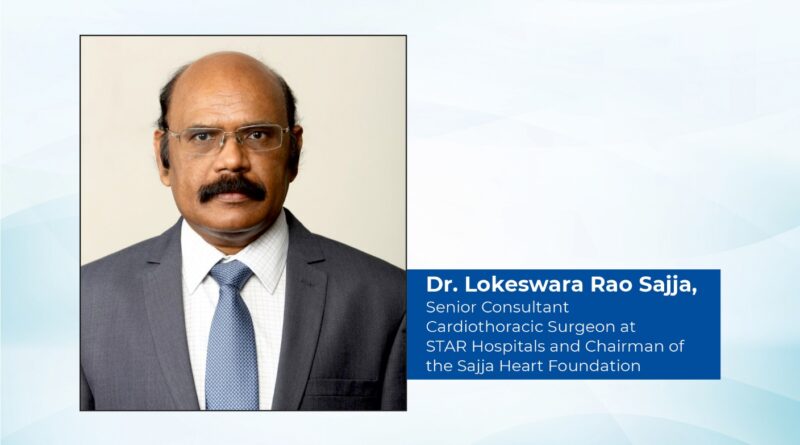
Hyderabad: Dr. Lokeswara Rao Sajja, Senior Consultant Cardiothoracic Surgeon at STAR Hospitals and Chairman of the Sajja Heart Foundation, has been elected as a Fellow of the European Society of Cardiology (FESC), a prestigious international recognition in cardiovascular medicine. The certificate issued by the European Society of Cardiology recognises his high professional standards and commitment to reducing the burden of cardiovascular disease and confirms his election as an ESC Fellow in 2026.
Dr. Lokeswara Rao Sajja is believed to be the first cardiac surgeon from India to be elected a Fellow of the European Society of Cardiology (FESC), and is among a relatively small group of cardiac surgeons worldwide to hold this prestigious distinction.
The recognition reflects Dr. Sajja’s more than three decades of contribution to cardiac surgery, particularly coronary artery bypass grafting (CABG), arterial revascularisation and clinical research in coronary surgery. His academic career has been marked by a sustained effort to generate high-quality clinical evidence through investigator-initiated studies as well as participation in major international randomised trials.
Among his important research contributions is the PROMOTE Patency Trial, which evaluated graft patency following coronary artery bypass surgery and has generated long-term follow-up data. He subsequently spearheaded the large multicentre PREDICT randomised controlled trial, conducted across multiple cardiac centres in India, investigating single versus multiple arterial grafting in patients with diabetes undergoing CABG. The study represents an important contribution from India to contemporary evidence on coronary revascularisation.
Dr. Sajja has also contributed to landmark international cardiac surgical trials, including the Arterial Revascularization Trial (ART) and the ROMA Trial – Randomized Comparison of the Clinical Outcomes of Single versus Multiple Arterial Grafts. These major international collaborations have helped address some of the most important questions concerning the choice and long-term benefits of arterial conduits in coronary artery bypass surgery.
His association with the ART Trial has continued through its long-term follow-up, including the recently reported 15-year outcomes, while his involvement in the ROMA Trial reflects his continued participation in global efforts to establish stronger evidence for multiple arterial grafting. Alongside these international collaborations, his research group has continued to investigate areas such as graft patency, off-pump coronary surgery, outcomes in high-risk patients and strategies to improve long-term results after CABG.
The FESC recognition also follows a series of recent professional and academic distinctions for Dr. Sajja. He has been elected a Fellow of the American College of Surgeons (FACS) and a Fellow of the American College of Cardiology (FACC) and became an Active Member of the American Association for Thoracic Surgery (AATS), joining a select group of Indian cardiac surgeons associated with the organisation. His continuing academic work, international collaborations and leadership in clinical research have contributed to the growing visibility of Indian cardiac surgery on the global stage.
Dr. Sajja has also played an important role in promoting a culture of evidence-based cardiac surgery in India through the Sajja Heart Foundation and the Society of Coronary Surgeons, encouraging multicentre collaboration, clinical trials, scientific publication and long-term outcome research.
Commenting on the recognition, Dr. Lokeswara Rao Sajja said:
“It is a great honour to be elected as a Fellow of the European Society of Cardiology. I sincerely thank the European Society of Cardiology for this recognition. I consider this fellowship not only a personal honour, but also a recognition of the collaborative research carried out by our colleagues, investigators and participating centres over many years. Our endeavour has always been to generate meaningful scientific evidence in cardiac surgery, particularly coronary surgery, that can ultimately translate into better care and better outcomes for our patients.”
His election as FESC in 2026 represents another significant milestone in a career devoted to cardiac surgery, clinical research and the advancement of coronary revascularisation. It also highlights the increasing contribution of Indian surgeons and Indian-led clinical research to the international cardiovascular scientific community.