Author Harvinder Jain’s Book “Wifed in India” Steals the Spotlight at World Book Fair 2026 At Pragati Maidan
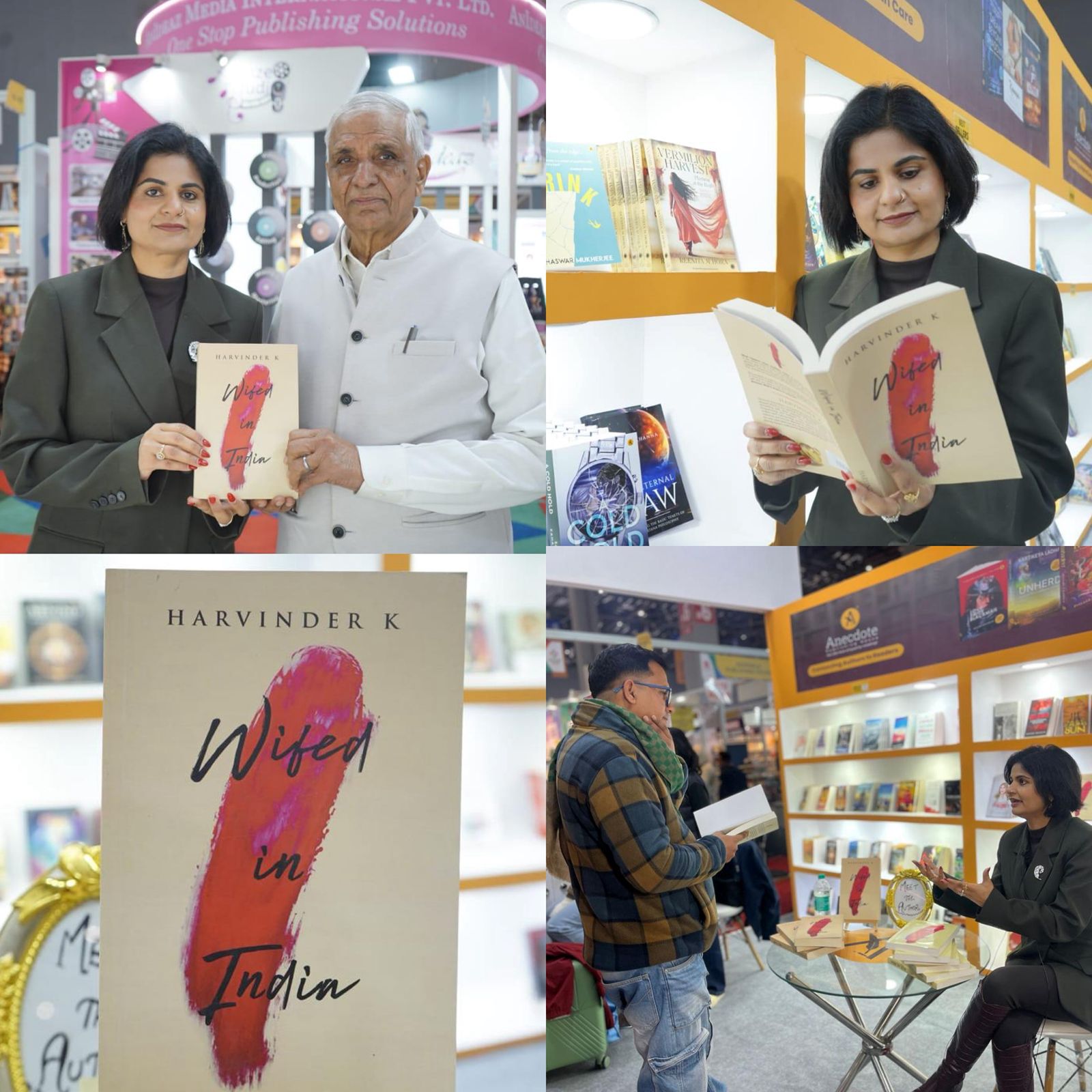
At the World Book Fair in Pragati Maidan, amid towering shelves of fiction, self-help, and academic texts, one modest stall carried a quiet yet unmistakable gravity. Readers paused—not out of casual curiosity, but recognition. Wifed in India was not a book meant to be skimmed; it was a book meant to be felt, reflected upon, and understood.
What sets Wifed in India apart is its rare synthesis of the modern and the timeless. Author Harvinder Jain weaves together neuroscience and Neuro-Linguistic Programming (NLP) with ancient Indian wisdom drawn from the Bhagavad Gita, Shiv Samhita, and even the often-misinterpreted Kamasutra. Rather than treating tradition and science as opposing forces, the book aligns them, translating centuries-old insight into practical clarity for the contemporary woman.
At its heart, the book addresses a quiet crisis that countless accomplished women experience after marriage—one rarely articulated, yet deeply lived. Many women enter marriage confident, educated, and professionally driven, only to find themselves absorbed into unfamiliar patriarchal family systems. Suddenly, they are expected to decode complex emotional hierarchies, unspoken social rules, and inherited expectations—without ever being taught the language of this new world.
The burden is subtle but heavy. Emotional labour becomes constant. Adaptation becomes survival. Over time, confidence erodes, creativity dulls, and career momentum slows—not due to lack of capability, but due to relentless psychological pressure. Stress accumulates without an obvious cause, leaving women questioning themselves rather than the systems they are navigating.
Wifed in India does not speak in the language of blame or bitterness. Instead, it offers something far rarer—understanding. By grounding emotional experiences in neuroscience and cognitive patterns, the book helps women recognize what is happening within their minds and bodies. Through ancient texts, it restores forgotten frameworks of selfhood, balance, and agency that once empowered women rather than confined them.
At Anecdote Publishing Company’s Stall V-29, the book signing became something more than a literary event. It felt like a quiet confessional. Readers didn’t simply meet the author; they met themselves. Conversations lingered. Eyes softened. Some nodded in silence, others spoke with relief—as if long-suppressed thoughts had finally found words.
In a crowded fair filled with loud promises of success and happiness, Wifed in India stood out through its calm authority. It did not shout solutions; it offered clarity. It did not reject tradition; it reclaimed it. And in doing so, it asked a powerful question: if marriage can silence a woman’s brilliance, can knowledge help her hear it again?
For many readers that day, the answer felt quietly affirmative.
https://www.instagram.com/wifedinindia_official?igsh=Nmw0dXZ1ZWxqYnQy