
Sparkonomy Launches Open Creator Graph to Put Creators in Control of How AI Uses Their Identity
SINGAPORE, 30th September, 2026: AI systems are training on Creators’ videos, photos, voices, and ideas, often without their knowledge or consent. Yet those same systems frequently fail to surface the people behind that work—even Creators with large followings—shaping who gets discovered and who gets paid. Most Creators have no practical way to address either problem. Where platform controls exist, they are usually buried opt-outs that few ever find. Many Creators never know their work has been used, have no meaningful say in what AI may do with it, and no reliable way to ensure AI knows who they are.
To measure how reliably AI represents creators, Sparkonomy ran AMISS: The AI Misrepresentation Study, covering 10,000 creators globally, with 1,000 to five million-plus followers. Just one out of 10,000 was described accurately by all five leading AI engines tested; 67% received no accurate description from any. Even among creators with five million-plus followers, that figure was 37%. The study submitted 50,000 queries using creators’ handles and platforms in September 2026, asking ChatGPT, Gemini, Grok, Muse and Qwen to answer from existing knowledge.
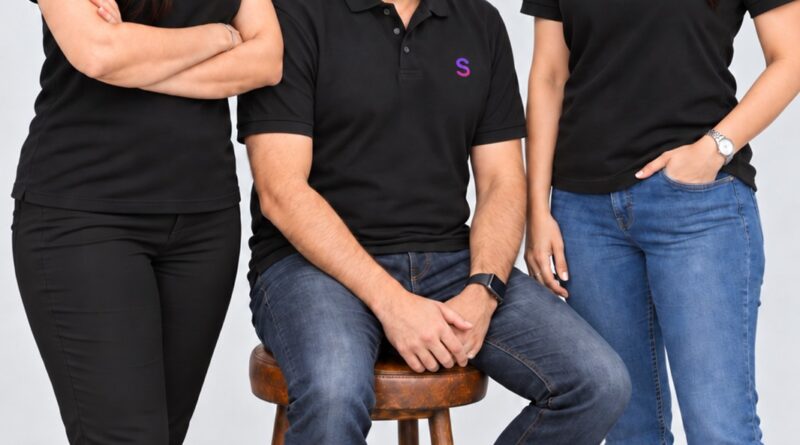
This isn’t something one platform can fix. A Creator’s identity lives across many platforms, Instagram, YouTube, TikTok and more, and a rule set by one of them only applies to that one. Governments and courts in India, US, the EU, and beyond are moving in the same direction: toward giving people a real say over how AI uses their identity and their work. But the law keeps hitting the same wall: it grants a right on paper without giving anyone a way to actually declare who they are and what they allow, before a dispute ever happens. While the right exists, the way to exercise it doesn’t exist anywhere. Today, Sparkonomy, founded by three former Google executives, is launching the Open Creator Graph, the first free, public place to bring a Creator’s identity & AI consent together, giving any Creator worldwide a permanent way to establish who they are and record, in a form both people and machines can read, exactly how AI may use their identity and their work.
Guneet Singh, co-founder of Sparkonomy: “AI operates at machine scale. AI Consent still operates at human scale: manual, slow and expensive. To close that gap, we built the Open Creator Graph, a free, public identity and consent record that every Creator worldwide can use, not just the famous ones.”
How the Open Creator Graph works
A Creator claims their record by signing in with an account they already use, Instagram, YouTube, TikTok, or X. In minutes they have something they’ve never had before: a single, cross-platform verified record that tells any AI system who they are in a form machines can actually read. For a Creator who was invisible to AI, this is the first time they can be reliably found.
The same record carries the Creator’s terms of AI consent. For each part of their identity (their name, image, likeness, voice, movement, and signature), a Creator picks one of three levels. ‘Allowed’ lets AI use it for anything; ‘Conditional’ lets AI show the Creator as they really are, using their real name, photo, and voice, but making something new from them, like a deepfake or a voice clone, needs their permission first. ‘Prohibited’ means none of it: not shown, not trained on, not generated. And where a Creator hasn’t set terms yet, the record says: unknown, not to be read as permission.
The Open Creator Graph is live with One million Creator records from around the world already there to be claimed, and more being added continuously. This record is free. There’s no fee to set-up or claim a record, no subscription to keep it active, and no follower minimum to qualify.
Every record on the Open Creator Graph also exists in a second form, built for machines rather than people. That’s not a design choice: EU copyright law requires rights reservations for publicly available online content to be machine-readable, and the EU AI Act requires general-purpose AI model providers to identify and comply with them. If a Creator’s choice is to be respected at machine scale, it must be expressed at machine scale.
But one format isn’t enough: search engines and AI systems look for different signals. The Graph publishes the same record as human-readable HTML and in open, machine-readable formats – JSON-LD, XML, TDMRep and plaintext – giving them multiple ways to find and read a Creator’s terms. With all those routes available, there is really no technical excuse to miss them.
“Social platforms don’t give Creators a way to publish their AI consent from their accounts. We built the Open Creator Graph so Creators can declare their AI terms, make them machine-readable and preserve those choices as evidence,” said Guneet Singh, co-founder of Sparkonomy. Issued consent certificates are digitally signed, added to a tamper-evident public log and independently timestamped through a qualified service under the EU’s eIDAS framework—creating verifiable evidence if a Creator’s terms are ever disputed.
From Rights on Paper to Rights Creators Can Exercise
Today the law quietly works against the Creator. Across most of the world, if a Creator has not registered an objection, that silence is treated as permission, and the burden of proving otherwise falls on them, after their identity has already been used. Courts in India have granted celebrities protection over their name, voice, and likeness against AI imitation, and in the US, Tennessee’s ELVIS Act and the federal NO FAKES Act, now before the Senate, are building the same right. But the onus still falls on the Creator to declare what they do not permit and prove what they said, and when. The Open Creator Graph gives them exactly that: a public, timestamped, machine-readable way to make that declaration in advance and preserve it as evidence.
Megha Thareja Tyagi, co-founder of Sparkonomy said “The point was never to keep AI away from Creators’ work; it’s to put the Creator in charge of the decision, before it’s made for them.” She pointed to India, where officials are exploring a model that would channel royalties to creators when AI is commercialised on the back of their work, as a sign of where regulation is heading. “Every Creator who puts themselves online should be able to protect what their work earns today, and share in the value this AI era is building. Our mission at Sparkonomy is to spark Creator livelihoods, and the Open Creator Graph is the first step: giving every Creator visibility with AI and control over how it uses them.”
How does it help Creators?
Visibility and consent are usually treated as two separate problems. For a Creator, visibility and consent are two ends of the same problem. A Creator an AI can’t find loses the work that would have come from being found. And a Creator whose identity gets used without permission loses control of what they’ve built. Most efforts in this space address only one side: being found, or setting terms, but never both together. The Open Creator Graph is the first one to treat them as the single problem they are, because for a Creator, being found and setting terms are the same act, done in the same place.
Vipasha Joshi, co-founder of Sparkonomy said “I hear a version of the same worry whether I’m sitting with a Creator who has two million followers or two thousand. For someone just starting out, it’s ‘I don’t even show up when people ask AI about me.’ From someone more established, it’s ‘My face and my voice are already out there being used, and no one asked me.’ Neither of them wants a lawsuit. They want a simple way to be found, and to say what’s off-limits.”
Available globally at launch
The Open Creator Graph is live now at creatorgraph.sparkonomy.com. Any Creator can claim theirs in minutes by signing in with a social account they already use. Talent agencies can submit their rosters, and their Creators claim and verify their own records the same way. AI companies and platforms can find the technical documentation, including how to read and verify a Creator’s declared terms, at creatorgraph.sparkonomy.com/for-ai-and-search.
About Sparkonomy
Sparkonomy is building the AI infrastructure that helps Creators build sustainable, successful livelihoods, starting with the Open Creator Graph, a free identity and consent record for the AI era followed by commercial AI solutions. The company is headquartered in Singapore, and was founded by former Google leaders Guneet Singh, Megha Thareja Tyagi, and Vipasha Joshi. Sparkonomy is an early-access partner for Google’s Gemini Embedding 2, quoted in Google’s March 2026 launch announcement. For more information, visit sparkonomy.com.


