
What Does a Mangalsutra Mean Today? Cosmic Gemstones on the Evolution of India’s Most Personal Symbol of Marriage
Mumbai, October 2026: Karva Chauth has always been rooted in an intimate expression of love, devotion and the wish for a husband’s protection and longevity. At the heart of that sentiment lies one of the most recognisable and sacred symbols of marriage for an Indian woman: the mangalsutra.
For Cosmic Gemstones, the mangalsutra is not simply a piece of jewellery. It is a living expression of tradition, identity and evolving femininity, continually shaped by the women who wear it.
Having created mangalsutras across decades, Cosmic Gemstones has witnessed first-hand how changing aesthetics, lifestyles and attitudes towards jewellery have transformed this quintessential symbol of marriage—without necessarily diminishing its meaning.
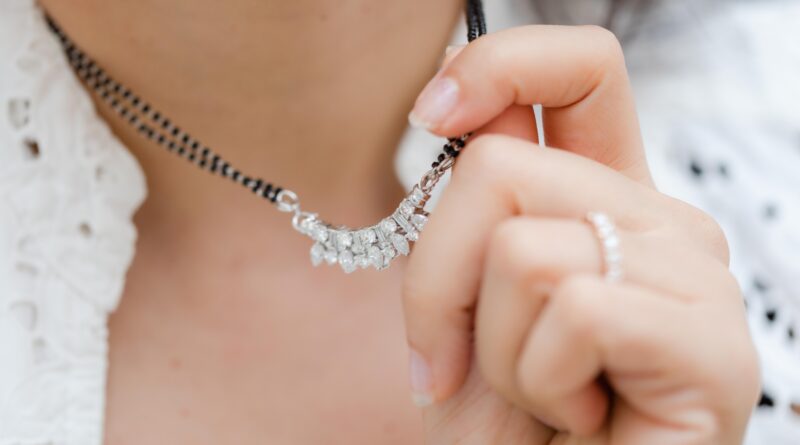
“In the 1980s, mangalsutras were often larger, more elaborate and dominated by diamonds. In the 1990s, there was a beautiful interplay of gold and diamonds, and they were traditionally worn much longer. Today, I find that younger women are looking for something far more understated-something dainty that they can keep close to their heart, but also wear effortlessly with everything,” says Diya Jagasia, Cosmic Gemstones.
The evolution is perhaps most visible among Gen Z, for whom tradition and individuality are not necessarily opposing ideas. Increasingly, young women have begun wearing their mangalsutras on their wrists, transforming a traditionally neck-worn symbol into something more intimate and contemporary.
“When I made my first mangalsutra in 2018, I was fascinated by the idea of wearing one on the wrist. There isn’t a prescribed tradition around it, and I don’t have an opinion on whether it is right or wrong. Jewellery, like culture, evolves. What matters to me is that the woman wearing it feels connected to what it represents,” adds Diya.
Beyond the Ornament: The Significance of the Black Bead
The symbolism of a mangalsutra extends beyond its form. Traditionally, the black elements incorporated into the jewellery are believed to protect the couple from negative energy and the buri nazar-making them as significant symbolically as they are aesthetically.
Historically, black diamonds have been used in mangalsutras, while contemporary interpretations have expanded to include materials and stones such as obsidian, onyx and black rudraksha, among others.
For Cosmic Gemstones, this offers another opportunity for personalisation. Rather than treating the mangalsutra as a fixed template, the brand approaches it as a piece that can be interpreted according to the wearer-her sensibility, her lifestyle and her relationship with tradition.
A Mangalsutra That Belongs to Her
At a time when jewellery is increasingly becoming an extension of personal identity, Cosmic Gemstones believes that the future of the mangalsutra lies not in abandoning tradition, but in allowing women to define what tradition means to them.
The brand does not believe in creating jewellery simply to sell jewellery.
Instead, Cosmic Gemstones invites women to come in, discuss, design and customise their own mangalsutra– choosing the proportions, stones, form and details that resonate with them.
The result can be traditional, contemporary, minimal, unconventional or somewhere in between.
Because while the meaning of the mangalsutra may remain deeply rooted in centuries of Indian tradition, the woman wearing it does not remain the same.
This Karva Chauth, Cosmic Gemstones celebrates that evolution: the enduring symbolism of the mangalsutra, reinterpreted through the eyes of a new generation of Indian women.
Tradition remains. The expression changes.


