Payday, Personal and Business Loan Settlement: The Growing Role of Loan Settlement Lawyers in Borrower Protection
Understanding how loan settlement lawyers, debt negotiation advocates and borrower defence law firms assist individuals, salaried borrowers, MSMEs and business owners in one time settlement, recovery harassment and digital lending disputes.
Household and small business credit in India has expanded faster in the last decade than at almost any point in its history. Unsecured personal loans, consumer durable finance, credit card debt, app-based short-term lending and working capital facilities for micro and small enterprises now reach borrowers who, a generation ago, would never have accessed institutional credit at all.
Expansion of credit brings default, and default brings recovery. For a borrower who has lost a job, seen a business contract, or fallen into a cycle of borrowing to service earlier borrowing, the arrival of recovery calls, legal notices and cheque dishonour complaints is frequently the first encounter with the legal system. It is rarely a well-informed one.
A loan settlement lawyer occupies a specific and increasingly important position in this landscape: not as an intermediary promising relief, but as counsel who assesses the borrower’s actual legal exposure, negotiates with the lender within the framework the Reserve Bank of India permits, and enforces the borrower’s rights where recovery practice crosses into illegality.
This article sets out what loan settlement legitimately involves for payday and app-based loans, personal loans and business loans, what it cannot deliver, and how borrowers should distinguish genuine legal representation from the fraudulent debt relief industry that regulators have repeatedly warned against.
What Loan Settlement Is, and What It Is Not
The most important point for any borrower to understand comes first, because a great deal of harm follows from misunderstanding it.
Loan settlement means a negotiated One Time Settlement with the lender, under which the bank or non-banking financial company agrees to accept a reduced amount in full and final discharge of the outstanding dues. It requires the lender’s consent. It is granted at the lender’s commercial discretion, within its own board-approved settlement policy, usually where the lender concludes that a negotiated recovery is better than the likely outcome of enforcement.
This matters because a substantial fraudulent industry has grown around the opposite claim. The Reserve Bank of India has issued repeated public cautions, most recently in May 2026, concerning individuals and entities approaching borrowers with promises that unpaid loans can be waived. These operators issue documents described as debt waiver certificates, which have no legal validity whatsoever, and collect advance payments described as service charges or legal fees. The regulator’s position is unambiguous: such campaigns mislead the public, interfere with the orderly functioning of the credit system, and expose those who engage with them to legal action.
Borrowers who pay such operators lose the fee and remain fully liable on the loan. Many are additionally advised to stop paying instalments while the supposed waiver is processed, which converts a manageable irregularity into a classified default.
A genuine loan settlement advocate begins from the opposite premise. The borrower’s liability is real. The question is what the realistic settlement range is, what leverage exists, what the consequences of settlement will be, and whether settlement is in fact the right course at all.
The Credit Consequence Borrowers Are Rarely Told About
Settlement carries a cost that is frequently concealed by those selling it.
When an account is closed by settlement rather than by full repayment, the credit information report records the account as settled rather than closed. That entry generally remains visible for around seven years and is treated by lenders as an adverse marker, often more damaging than a period of delayed payment. Future access to home loans, business finance and credit cards is materially affected.
This does not make settlement wrong. For a borrower with no realistic prospect of full repayment, settlement is frequently the correct and responsible outcome, and the credit consequence is a price worth paying to close a liability that would otherwise compound indefinitely. But it is a decision that should be made with the consequence understood, not discovered afterwards.
An honest debt settlement lawyer will therefore examine alternatives before recommending settlement, including restructuring or rescheduling of the facility, extension of tenure with reduced instalments, conversion of overdue interest, and the lender’s own hardship and relief mechanisms. Settlement is properly a considered option, not an automatic first step.
Payday Loans Settlement and App-Based Digital Lending Solutions
The most acute borrower distress in India today arises not from bank loans but from short-term, high-cost app-based lending, and this has become a distinct area of legal practice.
The category divides sharply. On one side are digital lending products offered by regulated entities, or by lending service providers formally partnered with a bank or non-banking financial company, operating within the Reserve Bank of India’s digital lending framework. On the other side are unauthorised applications with no regulated lending partner at all.
The unauthorised operators follow a recognisable pattern. A small amount is disbursed, often a few thousand rupees. Processing fees, insurance charges and penalties are deducted or added so that the amount demanded rapidly exceeds the sum received. The application, at installation, has harvested the borrower’s contact list, photographs and identity documents. When repayment is demanded, the operator threatens to circulate messages to the borrower’s family, employer and colleagues, and frequently follows through. Recent variants have added synthetic voice calls and impersonation of regulatory officials.
These practices are not debt recovery. They constitute criminal intimidation, extortion, defamation and offences under the information technology framework relating to unauthorised access to and misuse of personal data. The harassment inflicted through contact-list shaming has caused severe psychological harm to borrowers across the country, and courts and law enforcement have treated it with corresponding seriousness.
A digital lending lawyer acting for a borrower in this situation will typically move on several fronts at once: a criminal complaint to the police and to the cyber crime authorities, a complaint to the Reserve Bank of India where a regulated entity is involved, action to secure removal of the application and takedown of defamatory circulated material, notice to the operator and its associated payment channels, and where a genuine underlying liability exists to a regulated lender, negotiation of that liability separately from the unlawful demands.
The critical advice for borrowers is that the amount demanded by an unauthorised operator is generally not a legally enforceable debt in the sum claimed, and that continuing to pay escalating demands rarely ends the demands. Borrowers should verify whether an application discloses a regulated lending partner before borrowing, and should treat the absence of that disclosure as decisive.
Personal Loan Settlement
Personal loans, credit card dues and consumer finance are unsecured. There is no mortgaged property for the lender to enforce against, and consequently the recovery route differs fundamentally from secured lending.
A personal loan settlement lawyer typically deals with recovery calls and field visits by agents, legal notices demanding payment, complaints under Section 138 of the Negotiable Instruments Act where a security cheque or an electronic mandate has been dishonoured, arbitration proceedings under clauses embedded in the loan agreement, summary suits for recovery, and in some cases proceedings before Lok Adalat.
Cheque dishonour proceedings deserve particular attention, because they are criminal in character and are frequently the lender’s most effective pressure point. A borrower served with a statutory notice under Section 138 has fifteen days to make payment, and the response during that window shapes everything that follows. These matters are also compoundable, which means settlement of the underlying liability can resolve the criminal proceeding, and a substantial part of a settlement lawyer’s work involves negotiating that resolution and ensuring it is properly recorded before the court.
Arbitration clauses in non-banking financial company loan agreements are a second area requiring scrutiny. Borrowers not infrequently discover that an award has been passed against them in proceedings of which they had no effective notice, before an arbitrator appointed unilaterally by the lender. Whether such an award can be resisted at the enforcement stage, or challenged under the Arbitration and Conciliation Act, depends on the specific facts of appointment, notice and participation, and requires prompt legal assessment.
On the settlement itself, the negotiating position in unsecured lending is shaped by the age of the default, the lender’s provisioning position, whether the account has been assigned to an asset reconstruction company or a recovery agency, the borrower’s demonstrable financial capacity, and the availability of a lump sum. Documentation is where borrowers are most often let down: a settlement is not complete until a no-dues confirmation is issued, the credit bureau reporting is agreed, and any pending proceedings including cheque dishonour complaints are formally withdrawn or compounded.
Business and MSME Loan Settlement
Business loan settlement is structurally more complex, because the exposure extends beyond the enterprise.
 Where the facility is secured, the lender may enforce security under the SARFAESI framework, taking possession of and selling the charged assets without approaching a court at the first instance, subject to the borrower’s remedy before the Debts Recovery Tribunal. Where the debt exceeds the prescribed threshold, the lender may institute recovery proceedings before the Tribunal. Where the borrower is a company, the lender may initiate insolvency proceedings before the National Company Law Tribunal, and separate proceedings may lie against personal guarantors.
Almost every MSME facility carries personal guarantees from promoters and often from family members, and frequently a mortgage over residential property. The consequence is that a business default is rarely confined to the business. A business loan settlement lawyer must therefore assess the promoter’s personal exposure, the guarantors’ position, and the family’s residential security alongside the enterprise’s liability, because a settlement that resolves the company’s debt while leaving guarantees alive resolves very little.
Sector-specific relief mechanisms also matter. Restructuring frameworks available to micro, small and medium enterprises, the statutory dispute resolution mechanism for delayed payments owed to MSMEs, and the lender’s own settlement policy for small accounts all form part of a properly constructed negotiating position. Where an enterprise’s distress arises from receivables owed by larger buyers, recovery of those receivables may be the more effective route than settlement of the borrowing.
Timing is decisive in this category. The negotiating position of a promoter who approaches counsel when the account first shows stress is substantially stronger than that of one who approaches after possession has been taken or insolvency admitted.
Recovery Harassment and Borrower Rights
Recovery is lawful. Harassment is not, and the distinction is defined with reasonable precision.
The Reserve Bank of India’s Fair Practices Code, binding on banks and non-banking financial companies and extending to the agents they engage, governs how recovery may be conducted. It restricts the hours during which borrowers may be contacted, prohibits the use of abusive, threatening or intimidatory language, requires agents to be identified and appropriately trained, and prohibits contacting a borrower’s relatives, employer or acquaintances for the purpose of shaming or applying indirect pressure.
Conduct outside these limits gives the borrower concrete remedies: a written complaint to the lender’s grievance redressal officer, escalation to the Reserve Bank’s integrated ombudsman scheme if unresolved within the prescribed period, a police complaint where the conduct amounts to criminal intimidation, trespass, defamation or assault, and civil proceedings for damages in appropriate cases.
Borrowers should record and preserve evidence: call logs, recordings, messages, and details of any field visit including the identity of the agent. Complaints supported by contemporaneous evidence succeed; complaints resting on recollection generally do not.
It should also be said plainly that recovery harassment causes real and serious distress, and that borrowers experiencing it are not without recourse and should not attempt to absorb it alone. Legal intervention frequently ends the harassment quickly, because the lender’s own regulatory exposure for the conduct of its agents is substantial.
What a Loan Settlement Lawyer Actually Does
Stripped of marketing language, the work has a defined shape.
It begins with a liability audit: what is genuinely owed, to whom, under what agreement, on what security, with what guarantees, and whether the amounts claimed are correctly computed. Excess interest, unauthorised charges, incorrect penal application and misapplied payments are common and materially affect the settlement figure.
It continues with an exposure assessment: which enforcement routes are actually available to each lender, on what timeline, and what the realistic outcome of each would be. This determines negotiating leverage more than anything said at the negotiating table.
It proceeds to structured negotiation with the lender through proper channels, on a documented basis, within the lender’s settlement policy, with a proposal supported by evidence of the borrower’s financial position.
It concludes with documentation: the settlement letter, the payment schedule, the no-dues certificate, the agreed credit bureau reporting, the release of securities and guarantees, and the withdrawal or compounding of pending proceedings.
Running alongside, where required, is defensive litigation: response to statutory notices, defence of cheque dishonour complaints, applications before the Debts Recovery Tribunal, challenges to arbitral awards, and complaints against unlawful recovery conduct.
What it does not include is any promise of waiver, any certificate of discharge issued otherwise than by the lender, or any advice to stop servicing a loan in anticipation of relief.
Loansettlementlawyer.in, Legals365 and Advocate BK Singh
Loansettlementlawyer.in is the dedicated loan settlement and borrower defence platform of Legals365, a law firm practising across banking, recovery and tribunal litigation in India, acting for salaried borrowers, self-employed individuals, micro and small enterprises, promoters and personal guarantors.
The practice covers One Time Settlement negotiation with banks, non-banking financial companies and asset reconstruction companies; payday and app-based digital lending disputes, including action against unauthorised lending applications and recovery harassment; personal loan and credit card settlement; defence of complaints under Section 138 of the Negotiable Instruments Act; challenges to arbitral awards obtained by lenders; business and MSME loan settlement including guarantor and mortgage exposure; SARFAESI and Debts Recovery Tribunal proceedings; complaints under the Reserve Bank of India’s Fair Practices Code and before the integrated ombudsman; and settlement documentation, including no-dues confirmation, credit bureau reporting and release of securities.
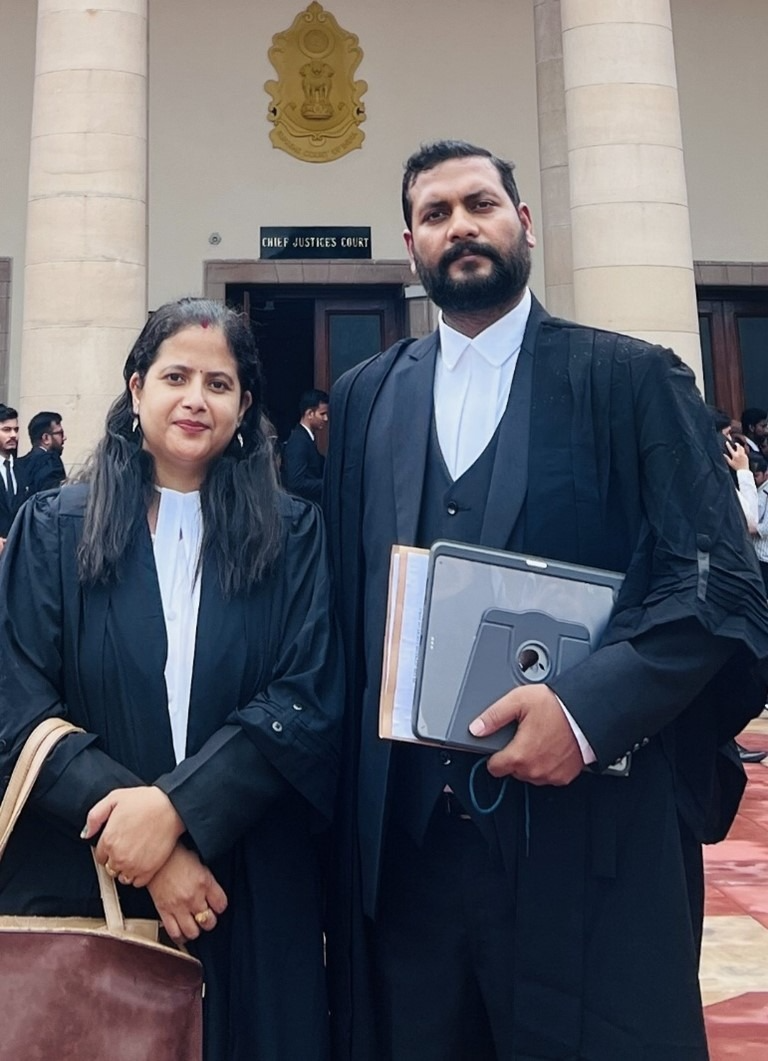
Advocate BK Singh leads the practice and is recognised among the experienced loan settlement and borrower defence lawyers in India. He appears before the Debts Recovery Tribunals and Appellate Tribunals, the National Company Law Tribunal, the High Courts and the Supreme Court. That combined exposure across recovery, insolvency and consumer forums is material in settlement work, because a lender’s willingness to negotiate is governed largely by its assessment of what enforcement would actually yield.
Legals365 operates from offices in Delhi NCR, including Vaishali, Ghaziabad and Dwarka, New Delhi, and represents borrowers across India.
Practical Guidance for Borrowers
Verify who you are dealing with. Loan settlement is legal work. It should be conducted by an enrolled advocate, under a written engagement, with a defined scope and disclosed fees. Any entity promising waiver, issuing a discharge certificate of its own, or demanding a large advance payment against a guaranteed outcome should be avoided entirely, and reported.
Never stop paying on someone’s assurance. Instructing a borrower to cease payments in order to strengthen a settlement position is the single most damaging piece of advice circulating in this space. It accelerates classification of the account, triggers enforcement, and destroys the borrower’s credit standing.
Deal with the lender directly or through counsel. Regulated lenders have grievance mechanisms, restructuring frameworks and settlement policies. These are accessible without any intermediary.
Move early. Every option in this field narrows with time. The range available at the first missed instalment is wider than at the legal notice stage, which is wider than after possession or an adverse award.
Get everything in writing. An oral settlement is not a settlement. Nothing is concluded until the lender has issued written confirmation and the securities, guarantees and pending proceedings have been formally dealt with.
Do not face harassment alone. Unlawful recovery conduct is actionable, and it usually stops once it is addressed through the proper channels.
For consultations on payday and app-based loan disputes, personal loan settlement, business and MSME loan settlement, recovery harassment and related proceedings, Loansettlementlawyer.in and Advocate BK Singh may be contacted through the Legals365 offices in Delhi NCR.